PLA in Simple Terms
PLA is a plant-based plastic made by fermenting plant starches (like corn, sugarcane, or wheat) into lactic acid, then linking those lactic acid molecules into long polymer chains. The result is a material that looks, feels, and performs like traditional petroleum plastic, but comes from renewable resources and breaks down completely in industrial composting facilities.
Think of it this way: Traditional plastic starts as crude oil pumped from the ground. PLA starts as plants grown on farms. Both end up as plastic products, but only one comes from renewable resources and can return to the soil when its useful life is done.
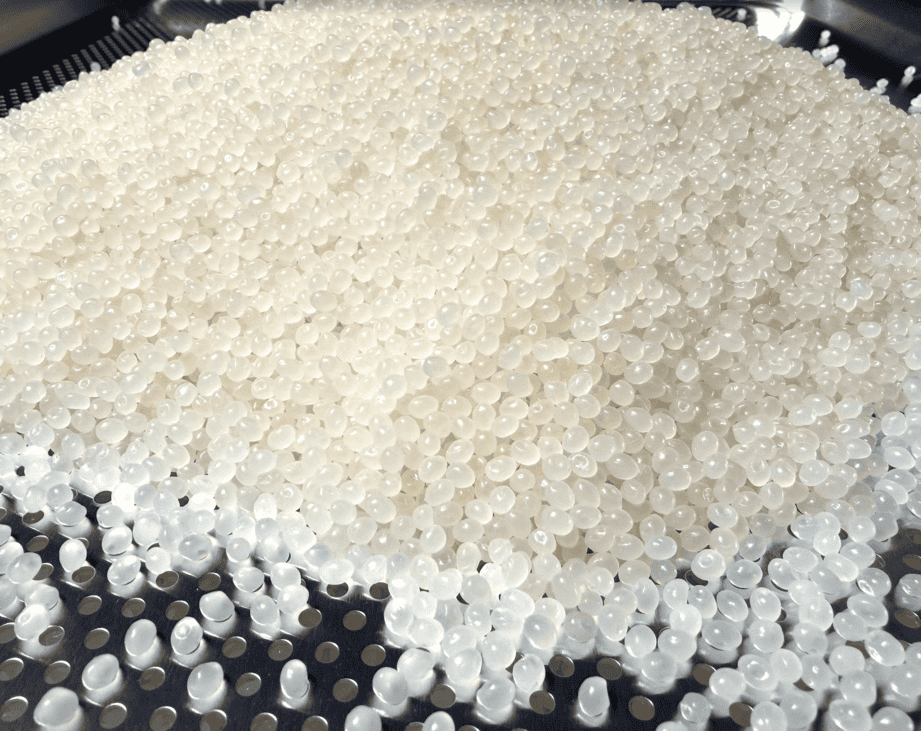
PLA resins
How PLA Is Made
Step 1: Plant Cultivation
PLA production starts on farms growing high-starch crops:
- Corn (dent corn) - Most common in North America
- Sugarcane - Popular in tropical regions
- Wheat - Emerging option, especially in Europe
- Cassava or beets - Alternative starch sources
Note: These are industrial crops, not food-grade corn or sugar. PLA production typically uses second-grade crops unsuitable for human consumption.
Step 2: Starch Extraction
The plants are harvested and processed to extract the starch. In corn, this means separating the starch from protein, oil, and fiber through wet milling, a process that's been refined over decades.
Step 3: Fermentation to Lactic Acid
The extracted starch is broken down into simple sugars (glucose), then fermented by bacteria into lactic acid, the same substance that causes muscle soreness after exercise. This fermentation process is similar to making yogurt or sourdough bread.
Step 4: Polymerization
The lactic acid molecules are chemically linked together (polymerized) into long chains called polylactic acid, or PLA. This step requires heat, catalysts, and careful control, resulting in plastic pellets or resin.
Step 5: Manufacturing Products
PLA resin pellets are melted and formed into straws, cups, utensils, containers, and other products using standard plastic manufacturing equipment, involving processes such as injection molding, extrusion, or thermoforming.
The NatureWorks Story
When discussing PLA, it's impossible not to mention NatureWorks LLC, the company that pioneered commercial-scale PLA production and remains the world's largest PLA manufacturer.
From Research to Reality
NatureWorks was founded in 1997 as a joint venture between Cargill and Dow Chemical. Their mission: create a commercially viable bioplastic that could compete with petroleum plastics on performance and cost. After years of R&D, they opened the world's first commercial-scale PLA plant in Blair, Nebraska in 2002.
The Ingeo™ Brand
NatureWorks markets their PLA under the Ingeo™ brand name. When you see "made with Ingeo biopolymer," you know the product contains NatureWorks' PLA resin. Many premium compostable products use Ingeo PLA as their base material.
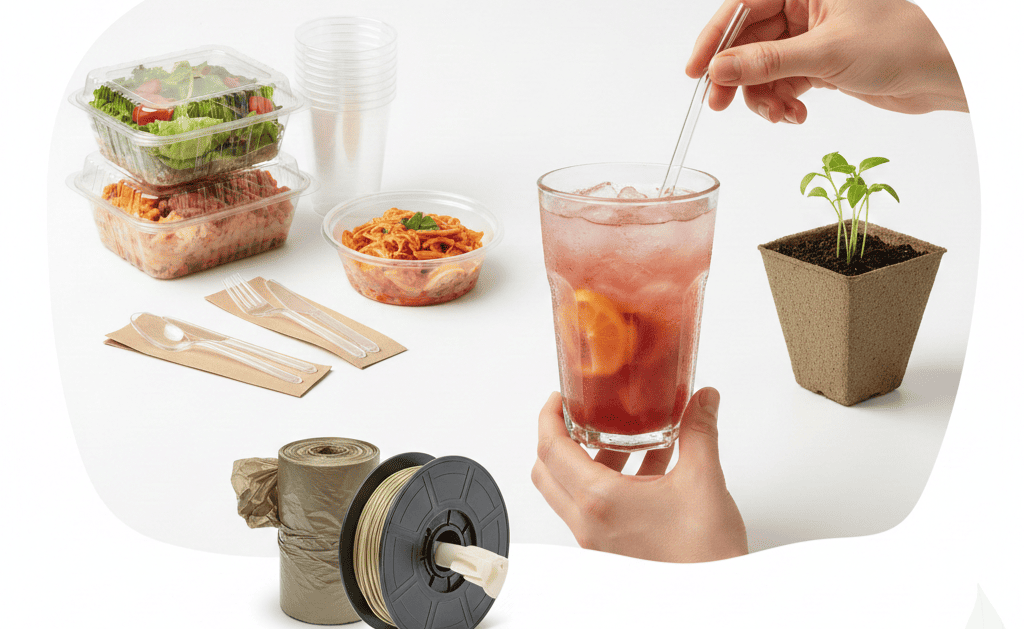
PLA's versatility: from drinking straws to food containers and beyond
Why PLA Became So Popular
1. Proven Performance
PLA straws and utensils perform identically to petroleum plastic in most applications. Customers can't tell the difference visually or functionally, which removes barriers to adoption.
2. Cost-Competitive
As production has scaled, PLA has become the most affordable compostable plastic option. It's now only marginally more expensive than traditional plastic and often cheaper than quality paper alternatives.
3. Established Supply Chains
With multiple manufacturers worldwide and 20+ years of production history, PLA has reliable supply chains, reasonable lead times, and consistent availability.
4. Comprehensive Certifications
PLA meets virtually every compostability and food safety standard globally:
- ASTM D6400 (US industrial compostable)
- EN 13432 (European compostable)
- ISO 17088 (International compostable)
- BPI Certified Compostable
- FDA approved for food contact
- EU food safety compliant
5. Works with Existing Equipment
Manufacturers can use existing plastic processing equipment to work with PLA, making it easy for companies to switch from petroleum plastic production to bio-based plastic without massive capital investment.
PLA Performance Characteristics
Temperature Range
- Cold drinks (32-65°F): Excellent (performs like plastic)
- Room temperature (65-80°F): Excellent (no degradation)
- Warm drinks (up to 110°F): Good (maintains structure)
- Hot drinks (110°F+): Not recommended (may soften)
Durability
- Maintains rigidity for 2+ hours in liquids
- No sogginess or deterioration
- Similar tensile strength to petroleum plastic
- Resists cracking under normal use
Shelf Life
- 2+ years when stored properly (cool, dry conditions)
- Won't spontaneously biodegrade in storage
- No special packaging required beyond normal protection from moisture
Environmental Benefits of PLA
Renewable Resource Base
PLA is made from plants that regrow annually, not fossil fuels that took millions of years to form. This creates a renewable cycle rather than depleting finite resources.
Lower Carbon Footprint
PLA production usually generates 75% fewer greenhouse gas emissions than petroleum plastic production. The plants used to make PLA absorb CO2 as they grow, partially offsetting manufacturing emissions.
Complete Biodegradation
In industrial composting facilities (140°F+, controlled conditions), PLA breaks down completely in 180 days into:
- Water (H2O)
- Carbon dioxide (CO2)
- Biomass (organic matter)
Zero microplastics. Zero toxic residue. Just basic organic materials that can safely return to soil.
Reduced Ocean Pollution
While PLA isn't designed to biodegrade in marine environments (that's PHA's specialty), it doesn't break down into harmful microplastics like petroleum plastic does. This makes it a safer material if it accidentally enters waterways.
Experience Premium PLA Products
PrairieMate builds high-quality PLA straws, ensuring consistent performance and compostability.
PLA Limitations (And When to Choose Alternatives)
Not Suitable For:
- Hot beverages above 110°F - Softens at higher temperatures (choose PHA instead)
- Home composting - Requires industrial facilities (choose PHA instead)
- Extended outdoor storage in hot weather (above 110°F) - May soften in extreme heat (choose PHA instead)
- Marine environments - Limited biodegradation in ocean water (choose PHA instead)
Perfect For:
- Cold beverages (iced coffee, soda, smoothies)
- Room temperature drinks
- Indoor restaurant service
- Cost-conscious operations
- High-volume use cases
- Areas with industrial composting access
PLA vs Other Sustainable Materials
| Feature | PLA | PHA | Paper |
|---|---|---|---|
| Cost | Moderate | Higher | Low-Moderate |
| Performance in Liquids | Excellent (2+ hours) | Excellent (2+ hours) | Poor (30-45 min) |
| Heat Resistance | Good (up to 110°F) | Better (up to 140°F) | Poor (degrades faster in heat) |
| Home Compostable | No | Yes | Yes |
| Industrial Composting | 180 days | 90-120 days | 60-90 days |
| Supply Availability | Excellent | Good (growing) | Excellent |
Quality Indicators: What to Look For
Not all PLA products are created equal. When evaluating PLA straws or utensils:
Ask About Resin Source
- Where is the PLA sourced from?
- What certifications does the base resin have?
Evaluate Product Quality
- Consistent wall thickness (no thin spots)
- Smooth finish without rough edges
- Clear transparency if advertised as clear
- No brittleness or easy cracking
The Future of PLA
PLA technology continues evolving:
- Second-generation feedstocks - Using agricultural waste instead of dedicated crops
- Improved heat resistance - New formulations approaching petroleum plastic performance
- Lower costs - Economies of scale driving prices down
- Enhanced biodegradation - Additives accelerating composting timelines
- Carbon-negative production - Capturing more CO2 than emitted
Frequently Asked Questions
Is PLA the same as "corn plastic"?
Yes, "corn plastic" is a common nickname for PLA since most PLA is made from corn starch. However, PLA can be made from any plant starch, not just corn.
Can PLA be recycled?
No, PLA should not go in traditional plastic recycling bins as it contaminates the recycling stream. It's designed to be composted, which is a good environmental outcome.
How can I tell if a product is really PLA?
Check with the manufacturer. Genuine PLA products will have documentation proving their composition and compostability.
Will PLA straws biodegrade in my backyard?
No, PLA requires industrial composting facilities with sustained high temperatures (140°F+). For home composting, choose PHA products instead.
How PrairieMate C-Series Enhances PLA
PrairieMate C-Series builds on the proven PLA platform with proprietary CelluMeld™ enhancements:
- Specific molecular weight selection: We specify exact PLA grades optimized for cold beverage performance
- Controlled additive package: Food-safe processing aids and stabilizers ensure consistent quality
- Precision manufacturing: Ohio-based production with rigorous dimensional and performance testing
- Batch traceability: Every package traceable to specific resin lots and production dates
This is why PrairieMate C-Series delivers predictable performance batch after batch, eliminating the quality variability that plagues generic PLA straws.
Ready to Switch to PrairieMate C-Series Straws?
Join thousands of businesses using PrairieMate C-Series straws powered by CelluMeld™ technology, with proven performance and reliable supply.
Shop Now