Why Storage Matters for Compostable Straws
Unlike petroleum plastic that's nearly indestructible, plant-based materials are more sensitive to environmental conditions. Poor storage can cause:
- Heat damage: Softening, deformation, or warping
- Moisture issues: Sticking together, mold growth, premature degradation
- UV degradation: Discoloration, brittleness from sunlight exposure
- Compression damage: Permanent deformation from improper stacking
- Contamination: Odor absorption, dust accumulation
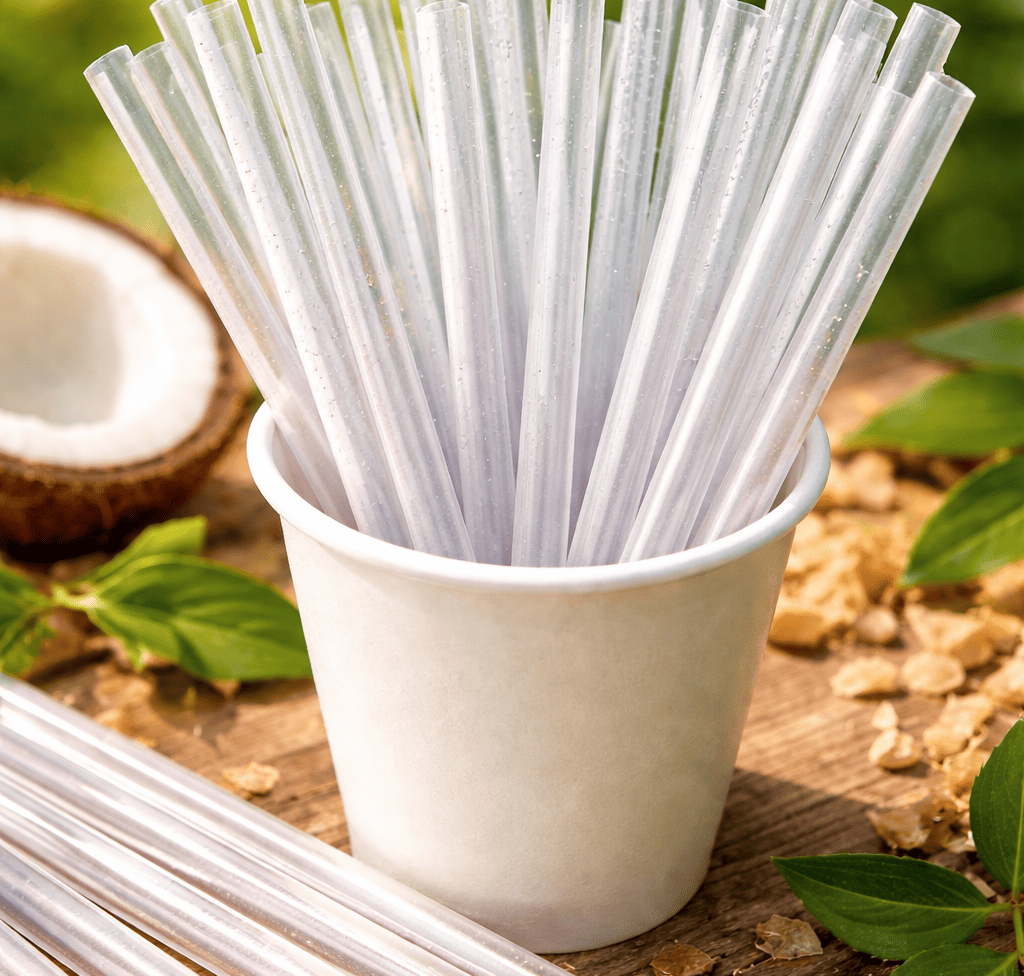
Ideal Storage Conditions by Material
| Material | Temperature | Humidity | Light | Shelf Life |
|---|---|---|---|---|
| PLA Straws | 60-75°F ideal (Under 85°F max) |
Below 60% | Avoid direct sun | 18-24 months |
| PHA Straws | 60-80°F ideal (Under 95°F max) |
Below 65% | Avoid direct sun | 18-24 months |
| Paper Straws | 60-75°F ideal | Below 50% critical | Avoid any moisture | 12-18 months |
Temperature Management
PLA Storage Temperature Guidelines
- Ideal range: 60-75°F (15-24°C), maintains optimal rigidity
- Acceptable range: 50-85°F (10-29°C), still safe but monitor
- Caution zone: 85-110°F (29-43°C), risk of softening if under pressure
- Damage risk: Above 110°F (43°C), straws may deform permanently
PHA Storage Temperature Guidelines
- Ideal range: 60-80°F (15-27°C), maintains optimal rigidity
- Acceptable range: 50-95°F (10-35°C), safe for storage
- Caution zone: 95-130°F (35-54°C), monitor for softening
- Damage risk: Above 130°F (54°C), potential deformation
Temperature Control Solutions
- Climate-controlled storage: Best option for large quantities
- Insulated storage areas: Garage/warehouse with good insulation
- Avoid: Attics, cars, near ovens/dishwashers, direct sun
- Summer precaution: Move inventory to coolest available area
- Winter concern: Freezing won't damage straws, but condensation upon warming can
Humidity & Moisture Control
Why Humidity Matters
- Paper straws: Absorb moisture → softening, mold risk
- PLA straws: High humidity + heat → potential hydrolysis (degradation)
- PHA straws: More moisture resistant but still best kept dry
- All materials: Moisture causes straws to stick together in boxes
Humidity Control Best Practices
- Keep boxes sealed until ready to use (original packaging protects)
- Use dehumidifier in storage area if humidity > 60%
- Avoid basements or areas prone to dampness
- Elevate boxes off concrete floors (use pallets or shelving)
- Check for condensation regularly, especially seasonal changes
- Silica gel packets can help in opened boxes (food-safe only)
Signs of Moisture Damage
- Straws sticking together inside box
- Box exterior feels damp or shows water marks
- Musty smell when opening box
- Visible mold or discoloration
- Paper straws feel soft before use
Light & UV Protection
Effects of Light Exposure
- UV degradation: Breaks down polymer chains over time
- Discoloration: Clear straws may yellow, colored straws fade
- Brittleness: Extended UV exposure makes straws fragile
- Surface degradation: Rough texture can develop
Light Protection Strategies
- Keep in original boxes - cardboard blocks UV
- Avoid windows - no direct or indirect sunlight
- Use opaque containers for front-of-house dispensers
- Cover clear dispensers or position away from windows
- Interior storage - windowless rooms ideal
Storage Questions?
PrairieMate provides detailed storage guidelines with every order. Get expert advice for your specific facility and climate.
Proper Stacking & Organization
Vertical Stacking Guidelines
- Maximum height: 5-6 boxes high for standard-weight boxes
- Weight distribution: Heavier boxes on bottom
- Stability: Ensure level, stable surface
- Access: Most-used items at waist height
- Safety: Never stack above head height without proper racking
Pallet Storage Best Practices
- Keep wrapped: Don't remove shrink wrap until needed
- Off floor: Use pallet jacks or forklifts, not direct floor contact
- Spacing: 6-12 inches between pallets for air circulation
- Orientation: Position for easy access to oldest inventory
- Labeling: Clear labels with receive date on multiple sides
Organization Systems
- FIFO labels: Mark each box with receive date
- Color coding: Different straw sizes in different colored boxes/labels
- Zone system: Designate areas for different products
- Inventory log: Track what comes in and goes out
- Reorder triggers: Mark "reorder point" level on shelving
Common Storage Mistakes
Mistake 1: Storing Near Heat Sources
- Problem: Dishwashers, ovens, water heaters create hot spots
- Result: PLA softens, straws deform under their own weight
- Solution: Maintain 3+ feet distance from any heat-generating equipment
Mistake 2: Direct Floor Storage
- Problem: Concrete floors cold/damp, pests can access
- Result: Moisture wicking, contamination risk
- Solution: Use pallets or shelving, minimum 4" off floor
Mistake 3: Overstuffing Dispensers
- Problem: Straws packed tight, sitting for weeks
- Result: Bottom straws compressed, get dusty
- Solution: Fill to 2/3 capacity, refill more often
Mistake 4: Opening All Boxes at Once
- Problem: Multiple open boxes expose more straws to air/moisture
- Result: Premature degradation, dust accumulation
- Solution: Open one box at a time, keep others sealed
Mistake 5: Ignoring Seasonal Changes
- Problem: Summer heat or winter cold/damp not addressed
- Result: Quality issues during extreme weather
- Solution: Move inventory seasonally, monitor conditions
Quality Check Procedures
When Receiving New Shipment
- Inspect boxes for damage (crushed, wet, torn)
- Check temperature if delivered in summer (boxes shouldn't be hot)
- Open one box and inspect random sample (10-20 straws)
- Check for: cracks, discoloration, deformation, odor
- Verify correct size, material, quantity
- Log receipt date on boxes
Monthly Storage Inspection
- Check temperature and humidity in storage area
- Look for any signs of moisture, pests, or damage
- Open random box and inspect sample straws
- Rotate inventory if needed (move older boxes forward)
- Clean storage area (sweep, wipe shelves)
Signs of Storage Problems
- Softness: Straws feel less rigid than when new
- Discoloration: Yellowing, fading, or spots
- Sticking: Straws clump together in box
- Brittleness: Snap easily when bent
- Odor: Musty or chemical smell
- Deformation: Bent, warped, or collapsed shape
Frequently Asked Questions
Can I store compostable straws in a garage?
Depends on climate. If garage stays 50-85°F year-round and is dry, yes. In hot climates where garages exceed 100°F in summer, or in humid/damp garages, find alternative storage.
What if my storage area gets hot in summer?
Move inventory to coolest available spot. Consider: basement (if dry), interior closet, climate-controlled area. For PHA straws, risk is lower due to higher heat tolerance. Avoid stacking PLA straws when temps exceed 90°F.
How long can opened boxes be stored?
If storage conditions are good, opened boxes last 6-12 months. However, best practice is to use opened boxes within 3-6 months to ensure peak quality. Keep opened boxes loosely covered to prevent dust.
Do straws expire?
No hard expiration, but quality gradually decreases. When stored properly: PLA/PHA good for 18-24 months, paper 12-18 months. After this, straws still work but may be slightly less rigid or prone to minor discoloration.
Can I store straws in the freezer?
Not recommended. While cold doesn't damage straws, removing from freezer causes condensation which creates moisture problems. Room temperature storage is best.
Get Storage Right From Day One
PrairieMate provides detailed storage instructions with every order, plus ongoing support to maintain optimal quality.
Shop Now