Material Overview
Paper Straws
Made from multiple layers of paper bonded with food-safe adhesives and sometimes coated for limited water resistance.
PrairieMate C-Series (PLA-Based, Powered by CelluMeld™)
Built on polylactic acid (PLA) backbone made from fermented plant starches, typically corn. PrairieMate C-Series straws use CelluMeld™ technology and are engineered for cold beverage applications and industrial composting. Represents our cost-effective product line.
PrairieMate M-Series (PHA-Based, Powered by CelluMeld™)
Built on polyhydroxyalkanoates (PHA) backbone produced by bacteria fermenting plant oils/sugars. PrairieMate M-Series straws use CelluMeld™ technology and are engineered for warm beverages, superior heat tolerance, and broader environmental compatibility including home composting, soil, and marine environments.
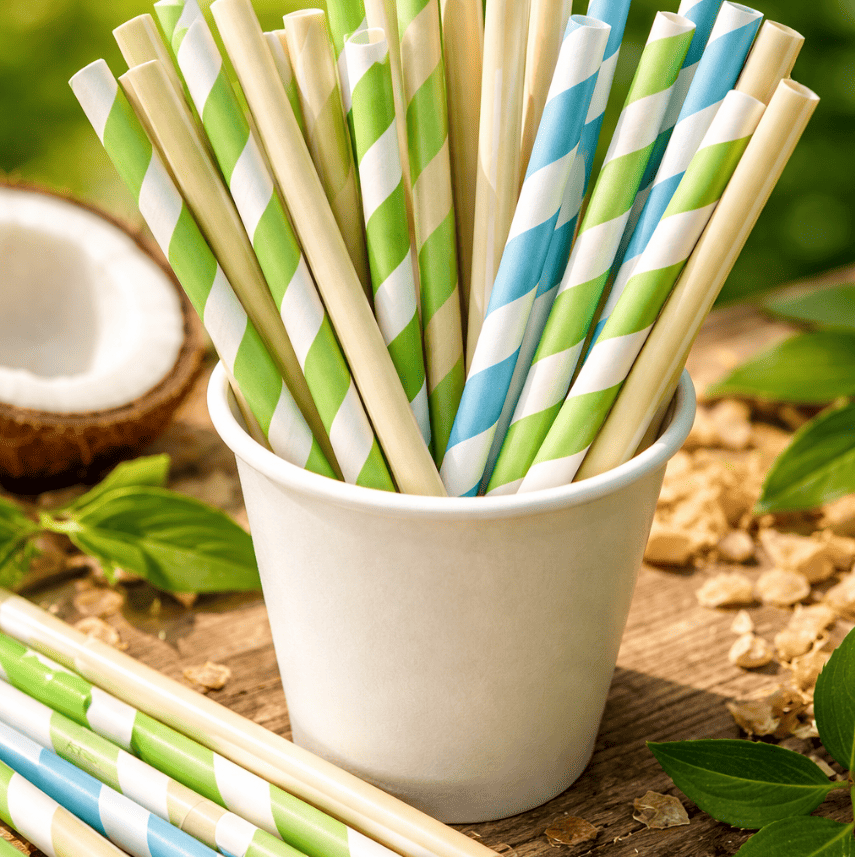
Paper straws
Comprehensive Comparison Table
| Feature | Paper | C-Series (PLA) | M-Series (PHA) |
|---|---|---|---|
| Performance in Cold Drinks | 30-45 minutes before soggy | 2+ hours, no degradation | 2+ hours, no degradation |
| Heat Resistance | Poor (degrades faster in heat) | Good (up to 110°F, or higher with crystallization) | Excellent (up to 140°F) |
| Customer Experience | Papery taste, soggy texture | Identical to plastic | Identical to plastic |
| Cost per Straw | Low to moderate | Moderate | Moderate to high |
| Industrial Composting | 60-90 days | 180 days | 90-120 days |
| Home Composting | Yes (6-12 months) | No | Yes (12-24 months) |
| Customer Complaints | Common (sogginess, taste) | Rare | Rare |
| Replacement Rate | High (customers request 2nd straw) | Very low | Very low |
When to Choose Each Material
Choose Paper If:
- Drinks consumed in under 30 minutes (quick service)
- Price is the absolute priority
- Customers specifically request paper
- Home composting is important to your audience
- You're willing to accept customer complaints
Choose PLA If:
- Customer experience is a top priority
- Serving drinks consumed over time (dining, lounging)
- Want proven, widely-available material
- Access to commercial composting
- Need cost-effective compostable option
- Want zero customer complaints about straw quality
Choose PHA If:
- Want premium sustainability positioning
- Serve warmer beverages or operate in hot climates
- Customers value home compostability
- Near coastal areas (marine biodegradable)
- Can justify premium pricing
- Want cutting-edge sustainable materials
Total Cost of Ownership Analysis
Direct Material Cost
| Paper straws | $0.01 - $0.03 per straw |
| PLA straws | $0.02 - $0.04 per straw |
| PHA straws | $0.03 - $0.05 per straw |
Hidden Costs to Consider
- Paper replacement rate: 20-30% of customers request second straw
- Staff time: Handling complaints and providing replacements
- Customer satisfaction: Impact on reviews and repeat business
- Brand perception: Cheap straws vs. quality experience
Environmental Impact Comparison
Production Footprint
- Paper: Tree harvesting, chemical processing, water intensive
- PLA: Annual crop cultivation, fermentation, lower water use than paper
- PHA: Bacterial fermentation, can use waste feedstocks, moderate footprint
End-of-Life Options
- Paper: Industrial/home compost, recycling (if clean), fastest breakdown
- PLA: Industrial compost only, biodegrades faster than plastic in landfills
- PHA: Industrial/home compost, marine biodegradable, most versatile
Microplastics
- Paper: None (organic material)
- PLA: None (complete biodegradation)
- PHA: None (complete biodegradation)
The Verdict: What Most Restaurants Choose
Based on industry data and customer feedback:
- Fast casual & quick service: Split between PLA (60%) and paper (40%)
- Full-service restaurants: Primarily PLA (75%) or PHA (15%), minimal paper (10%)
- Cafes & coffee shops: Mostly PLA (65%), some PHA (20%), some paper (15%)
- Bars & nightlife: Overwhelming PLA/PHA (90%), very little paper
Make the Switch to Better Performance
Shop our products and join restaurants across America choosing PLA and PHA for zero complaints and happy customers.
Shop Now