The Real Problem with Straw Breakage
"We tried compostable straws but they kept breaking" is a common complaint, but it's rarely the material's fault. Straw breakage typically results from one or more of these factors:
- Poor formulation: Low-quality resin or additives
- Manufacturing defects: Thin walls, inconsistent extrusion
- Storage issues: Heat, moisture, or UV degradation
- Wrong material for application: Mismatched to beverage type
- Handling damage: Rough transport or dispensing
Quick Diagnosis: Why Do Your Straws Break?
- Break when inserting into lid: Too brittle (material or storage issue)
- Crack at rim during use: Thin walls or customer biting
- Snap when stirring: Wrong straw size or insufficient rigidity
- Break in middle of straw: Manufacturing defect or damage
- Only some straws break: Quality control issue in manufacturing
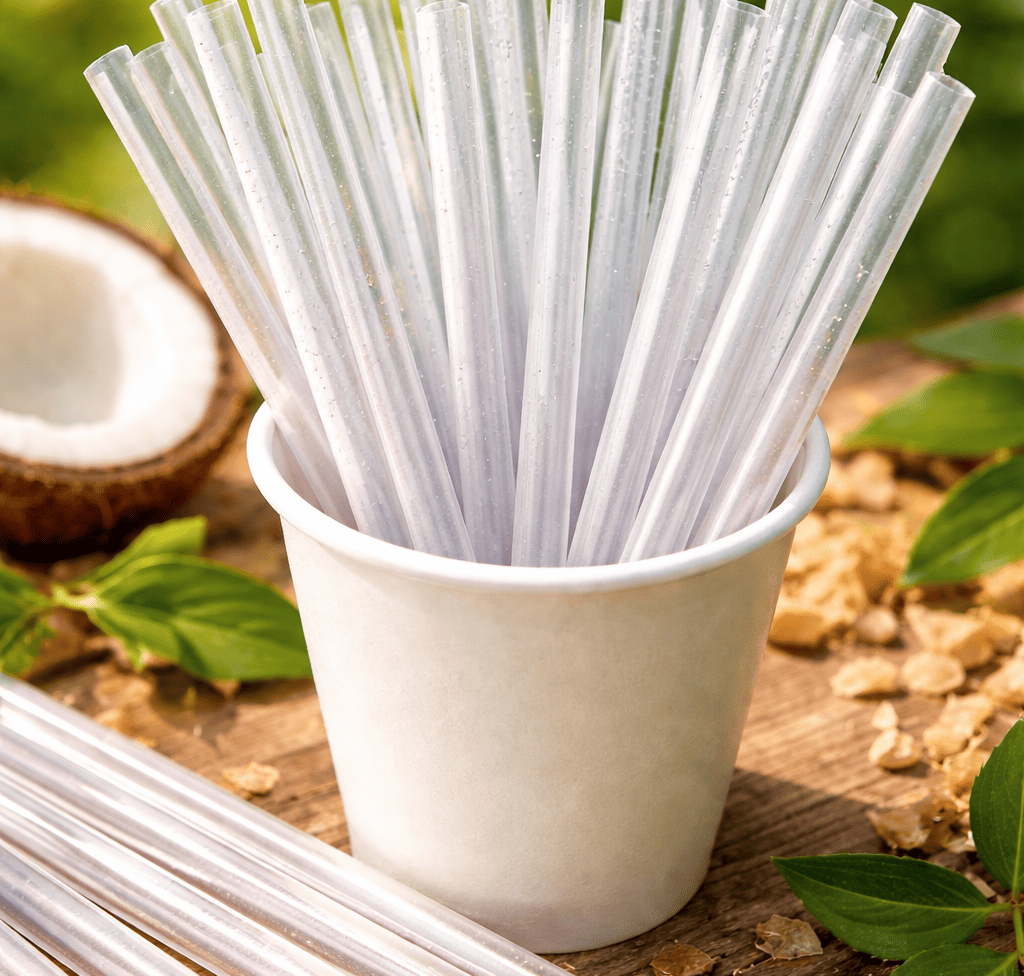
Cause #1: Low-Quality Resin & Formulation
What Makes Resin "Low Quality"?
- Virgin vs. recycled content: Some manufacturers use recycled PLA which can be more brittle
- Molecular weight: Lower molecular weight = less strength
- Additives: Cheap fillers or excessive additives weaken structure
- Inconsistent batches: Quality varies from production run to run
- Cost-cutting: Cheapest resin often = worst performance
Signs of Poor Formulation
- Straws break with minimal force (snap easily when bent)
- Whitish or cloudy appearance (should be clear or evenly colored)
- Inconsistent color or texture between straws
- Chemical or plastic smell stronger than expected
- Performance degrades quickly after opening box
What to Look For in Quality Resin
- Virgin resin certification: No recycled content for food contact
- Reputable suppliers: NatureWorks (for PLA), Danimer (for PHA), etc.
- Material data sheets: Supplier should provide detailed specs
- Consistent appearance: Every straw looks the same
- Food-grade certification: FDA/EU compliance documentation
Cause #2: Manufacturing Defects
Wall Thickness Issues
The problem: To cut costs, some manufacturers reduce wall thickness below safe minimums.
- Standard PLA straw: 0.1-0.2mm wall thickness
- Thin/cheap straws: 0.05-0.1mm (prone to cracking)
- Premium straws: 0.15-0.25mm (more durable)
- Jumbo/boba straws: 0.2mm+ (handle thick drinks)
Extrusion Quality Control
PLA/PHA straws are made by extruding molten resin through a die. Poor process control causes:
- Thin spots: Uneven wall thickness = weak points
- Air bubbles: Trapped air creates stress points
- Surface imperfections: Rough texture or ridges
- Dimensional inconsistency: Diameter varies along straw length
Cutting & Finishing Issues
- Rough cuts: Jagged edges create stress concentration
- Uneven ends: One end cut at angle
- Burrs or flashing: Extra material at rim
- Micro-cracks from cutting: Invisible cracks that propagate
Tired of Brittle, Breaking Straws?
PrairieMate uses only premium virgin resin with rigorous QC testing. Straws are tested every ten minutes from the production line. No more customer complaints about breaking straws.
Cause #3: Storage & Handling Degradation
Heat-Induced Brittleness
PLA becomes more brittle when exposed to prolonged heat, especially near its glass transition temperature (around 140-150°F).
- Garage storage in summer: Can exceed 120-140°F
- Near dishwashers/ovens: Constant low-level heat exposure
- Delivery in hot truck: Straws arrive already heat-stressed
- Direct sunlight: UV + heat = accelerated degradation
Moisture Effects
- PLA hydrolysis: Moisture + heat slowly breaks down polymer chains
- Dimensional changes: Absorption causes slight swelling/contraction
- Surface degradation: Loss of glossy finish, rougher texture
- Paper straws: Extreme moisture sensitivity (obvious softening)
UV/Light Degradation
- Photo-oxidation: UV breaks chemical bonds in plastic
- Yellowing: Visual indicator of UV damage
- Surface cracking: Micro-cracks from UV exposure
- Reduced flexibility: Straws become stiffer and more brittle
How to Prevent Storage Degradation
- Temperature: Store at 60-75°F, never above 85°F
- Humidity: Keep below 60%, use dehumidifier if needed
- Light: Keep boxes closed, avoid sunlight
- Rotation: Use FIFO (first in, first out). Don't let straws sit 12+ months
- Sealing: Keep boxes sealed until use
Cause #4: Wrong Material for Application
Material Selection by Use Case
| Beverage Type | Best Material | Why | Avoid |
|---|---|---|---|
| Iced Coffee/Tea | PLA or PHA | Rigid, cold drinks only | Paper (gets soggy) |
| Smoothies/Shakes | PHA or PLA jumbo | Wide bore, extra strength | Standard thin PLA |
| Bubble Tea/Boba | PHA jumbo | Extra thick walls, wide | Standard straws (too narrow) |
| Hot Drinks | PHA or stirrers | Higher heat tolerance | PLA (softens) |
| Water/Soda | Any compostable | Low-stress application | None (all work) |
| Alcoholic Drinks | PLA or PHA | Rigid, cold | Paper (alcohol degrades) |
| Outdoor/Summer Events | PHA | Heat resistant | PLA (may soften in sun) |
Size Matters
- Too thin for thick drinks: Standard straw in milkshake = breakage
- Too long without support: Long straws need thicker walls
- Diameter mismatch: Straw too small for lid opening = stress when inserting
Cause #5: Customer Handling & Use
Common Customer Actions That Break Straws
- Biting/chewing: Teeth marks create weak points that crack
- Over-bending: Bending to fit in car cupholder
- Aggressive stirring: Using straw as stirrer with ice
- Forceful insertion: Jamming through lid too forcefully
- Twisting: Spinning straw in lid opening
You Can't Control Customers, But You Can:
- Choose stronger straws: Higher quality = more abuse tolerance
- Staff insertion: Insert straws for customers (higher-end venues)
- Lid compatibility: Ensure straw fits lid easily
- Signage: "Please don't bite straws" (kids menus, etc.)
- Stirrer alternative: Provide separate stirrers for thick drinks
Quality Control Testing
Tests Manufacturers Should Perform
- Bend test: Straw bent 90° without breaking
- Compression test: Resistance to crushing
- Drop test: Full box dropped from 3 feet - no breakage
- Insertion test: Through various lid types
- Soak test: Time in cold liquid before softening
- Temperature test: Performance at hot/cold extremes
Tests YOU Can Perform on Samples
- Bend Test: Gently bend straw - should flex without cracking
- Visual Inspection: Clear, consistent color, smooth surface
- Wall Thickness: Feel thickness at rim, compare to known good straws
- Insertion Test: Push through your lid types - should be snug but easy
- Cold Drink Test: Leave in ice water 30 min - should stay rigid
- Batch Consistency: Compare 10 random straws - should all be identical
Red Flags When Testing Samples
- More than 1 in 100 straws breaks during normal handling
- Visible inconsistencies between straws
- Straws feel "hollow" or too light
- Rough edges or visible defects
- Straws crack when bent moderately
How PrairieMate Ensures Strong, Reliable Straws
Material Selection
- Virgin resin only: NatureWorks Ingeo PLA, Danimer PHA, and resins developed in house by our material science laboratory.
- High molecular weight: Optimized for strength
- Food-grade additives: Only FDA-approved, minimal amounts
- Batch testing: Every resin batch tested before production. Straws are tested every ten minutes from the production line.
Quality Assurance
- In-process testing: Samples tested during production
- Final inspection: Each pallet checked before shipment
- Storage protocol: Climate-controlled warehouse
- Shipping standards: Temperature monitoring in transit
- Feedback loop: Customer complaints investigated and addressed
Frequently Asked Questions
Are all PLA straws the same strength?
No. Strength varies significantly based on resin quality, wall thickness, manufacturing process, and formulation. Always test samples before committing to a supplier.
Do PHA straws break less than PLA?
PHA is generally more flexible and impact-resistant than PLA, making it slightly less prone to brittle fractures. However, a well-made PLA straw outperforms a poorly-made PHA straw. Quality matters more than material choice for most applications.
Can I fix my storage to save brittle straws?
If brittleness is due to recent heat/UV exposure, better storage may prevent further degradation but won't restore already-damaged straws. Use affected inventory quickly and improve storage for future orders.
How common is straw breakage with quality products?
With proper quality straws and storage, breakage rate should be under 0.5% (fewer than 1 in 200). If you're seeing more than 1-2% breakage, there's a quality or storage issue.
Should I switch materials if I have breakage issues?
Only if you've ruled out storage and handling issues. Often, switching to a higher-quality supplier of the same material fixes the problem without needing to change material types.
Experience the Difference Quality Makes
PrairieMate's straws are engineered for reliability. Shop our products and see why businesses trust us for consistent performance.
Shop Now